Advert

Home » Insurance Brokers Association of Canada VENDOR JOINT MARKETING APPLIED SYSTEMS

January 2023

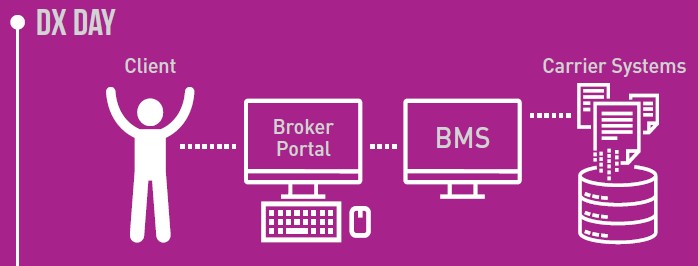
In Canada, the Property & Casualty (P&C) insurance industry lags other industries on connectivity within the broker channel. As a result, brokers struggle with process friction and duplication of effort (double entry), resulting in unnecessary expense and a less than ideal client experience.
Brokers use their own systems to manage their clients and carriers use theirs. Initial data entry is done by the broker into their BMS and then re-keyed (by the broker) into the carrier portal.

This approach requires double entry by the broker and introduces delays and data quality issues, which in turn require manual intervention and negatively impacts the end client experience.

While most other industries have made great headway in real-time data sharing and transmission along the steps in the value chain, real-time data connectivity remains in its infancy in the P&C industry.

However, there is progress being made. Applied Systems has recently introduced some exciting new features, including:

    • Small commercial rating integration with a growing panel of insurers, including Northbridge & Wawanesa. Accurate, real-time quotes eliminate double entry & rework, allowing brokers to serve more clients with less friction.
    • Greater than 70% of quoted personal lines premium volume through Applied Rating Services (ARS) is generated via API connectivity directly connected to carrier rating systems. Rates generated in this fashion are always accurate & up to date. This reduces friction and rework for the broker & improves the experience for the customer.
    • Applied Data Lake technology delivers simpler access to a more comprehensive set of data – your own and third party – to enable you to collect and organize it into insights using existing business intelligence (BI) tools. The Applied Data Lake provides easier
      access to data so brokers can create custom reports and analyze & act on information more quickly.
    • Integrating eDocs-based claims & billing notifications into Epic so that front-line brokers do not have to access carrier portals to stay on top of relevant client information. This saves time for the broker & improves the client experience.

Real-time connectivity will not arrive in the broker channel all at once – the progress will be incremental. We encourage brokers to discover the enhancements that their vendor partners have already implemented and to make use of them.

We also encourage carriers and vendors to continue to make investments in real-time connectivity. Given that there are benefits to customers, brokers, and carriers, it only makes sense to push this as hard and fast as possible.


Download The PDF version


Aligning with Regulatory Frameworks and Standards

Principles will align with international AI guidelines (e.g., ISO 42001, OECD frameworks) and industry-specific regulations (e.g., RIBO, OSFI, AMF) upheld by stakeholders. Adherence to legal standards will help organizations navigate jurisdictional requirements, promote sustainable practices, and prevent misuse of AI data

Encouraging Responsible Al Innovation

Principles will encourage the broker community to innovate responsibly by developing AI systems that prioritize consumer well-being, inclusivity, and fairness, while also assessing the societal, environmental, and economic impacts of their AI solutions

Promoting Accountability in AI Oversight

AI principles will reinforce accountability across all levels of organizations and third-party collaborators. By defining roles, ensure human oversight in AI processes, this enhances traceability, enables informed decision-making, and embeds mechanisms for ethical redress when errors or adverse outcomes occur

Ensuring Consumer Trust and Fairness

AI governance principles support commitment to transparency, fairness, and accountability. By requiring explainable outcomes and proactive consumer communication, it fosters trust among the broader broker community, their clients, and external stakeholders

Supporting Ethical Standards and Stakeholder Collaboration

By incorporating AI governance principles, broker members can align with its mission of fostering an ethical culture among its stakeholders Address biases, safeguard consumer protection, and promote inclusivity, which will reinforce commitment to ethical AI practices in collaboration with industry stakeholders, regulators, and third-party solution providers

PoC Use Case Overview: Al-Assisted Coverage Discovery & Gap Analysis

Technical Requirements

AI models with context on industry benchmarks and policy structures to interpret existing policy terms, endorsements, and clauses.

Integration with BMS to retrieve client profiles, exposure information, and historical policy data.

Data ingestion and continuous updates to ensure alignment with typical coverage patterns and industry guidance.

Data security and compliance features to protect client information.

Functional Scope

Analyze client-submitted data, including exposures, business context, and other relevant information.

Extract and interpret existing policy terms (e.g., endorsements, exclusions, clauses).

Benchmark against typical coverage patterns and industry guidance to identify coverage gaps.

Prioritize identified coverage gaps and provide rationale based on considerations such as industry standards and risk.

Recommend relevant products and coverage options tailored to the client profile, and generate summaries for client discussions.

AI-Powered Client Onboarding & Data Intake – Overview:
Proof of Concept (PoC) Use Case

Technical Requirements

BMS Integration: Integration with BMS for secure data capture and storage.

Applied ARS Integration: Integration with Applied ARS to enable automated quote generation.

Dedicated Parsers for Renewal: Document parsing capability for 5–6 carrier renewal documents with high accuracy.

Extensibility Framework: Modular architecture to support future enhancements and additional automation.

Functional Scope

AI Chatbot for Client Onboarding: Collect client information, answer onboarding questions, and guide users through the onboarding process.

Data Collection & Storage: Capture and store collected data directly in the broker’s BMS.

Document Processing: Enable clients to upload renewal documents and extract key data to accelerate the onboarding process.

Quotes Generation: Generate quotes based on collected information.